The dances
Hula, siva and ʻōteʻa
The dances and music a Polynesian luau draws on, from Hawaiian hula kahiko and ʻauana to Samoan siva and sasa, Tahitian ʻōteʻa, slack-key guitar and ukulele.
Book a table at the luau ↗Quick answer
A Polynesian luau show borrows from several island traditions. From Hawaiʻi come hula, in its ancient kahiko and modern ʻauana forms, slack-key guitar and the ukulele. From Samoa come the graceful siva, the seated, clapping sasa and the fire knife. From Tahiti comes the fast, drum-driven ʻōteʻa. Knowing which is which turns a pleasant show into one you can read.
Hula kahiko
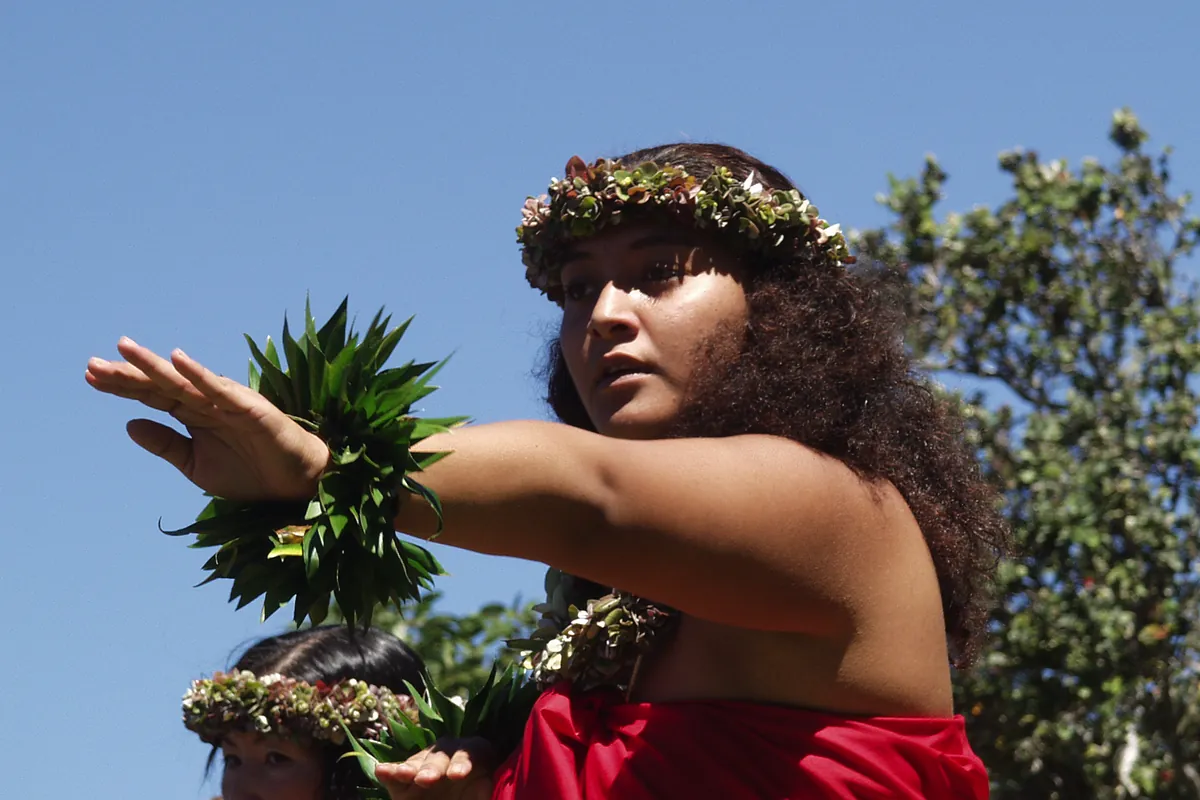
Kahiko is the ancient style of hula, generally defined as hula composed before 1894 and performed without modern instruments. It is danced to chant and to traditional percussion: the ipu gourd drum, the sharkskin-covered pahu, feathered gourd rattles, split bamboo sticks and smooth stones used like castanets. Many kahiko dances honoured chiefs or gods, and performing one without error mattered, since a mistake could be read as bad luck. The look is often austere, with a reverence for the dance's spiritual roots.
Hula ʻauana
ʻAuana, meaning to wander or drift, is hula as it developed under Western influence. Its songs are sung like popular music, often in a major key with harmony, and the band uses portable stringed instruments: guitar, ʻukulele, steel guitar and bass. The costumes are less revealing than in kahiko, and the songs can describe anything from a place to a feeling. Hand movements carry the meaning, standing for the sway of a tree or a wave on the ocean, so watch the hands as much as the hips.
Samoan siva and sasa
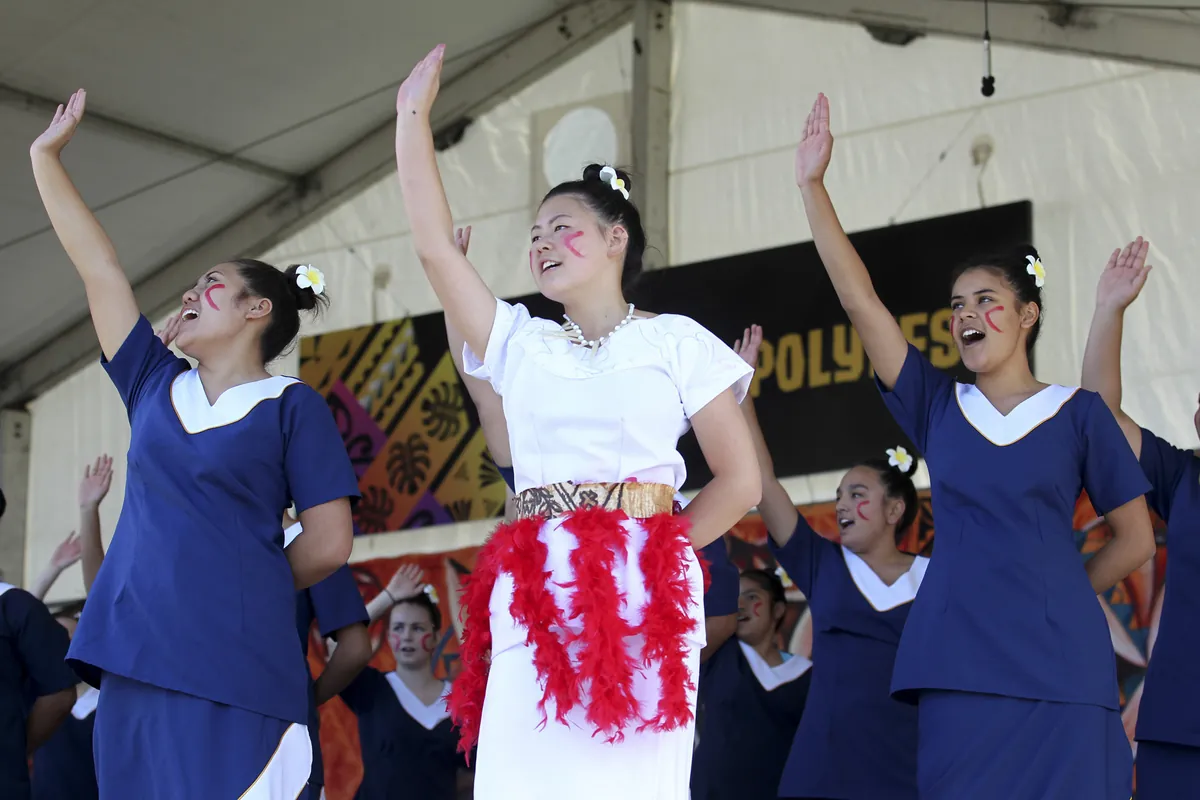
Siva Samoa is the general term for Samoan dance. Traditional siva asks for grace above all, with subtle, delicate movements of the arms and hands, and in modern times it is performed by a taupou. Sasa is quite different: a group dance, usually performed seated, built on sharp, synchronised claps and quick hand movements. Its name means to strike, and its gestures act out daily life, from paddling a canoe to cooking. Other Samoan forms include the taualuga and the siva afi, the fire-knife dance.
Tahitian ʻōteʻa
The ʻōteʻa comes from Tahiti, and its rapid hip movement is often what newcomers expect of every Polynesian dance. Dancers stand in rows and shake their hips at speed to percussion alone, with no singing, led by the tōʻere, a slit log drum struck with sticks. It existed before European contact as a men's dance; now male troupes, female troupes and mixed ones all perform it. Interpretations of the ʻōteʻa are a regular part of Polynesian dance shows at luaus and visitor venues in Hawaiʻi and other Pacific resorts.
Slack-key guitar and the ukulele
Slack-key guitar, kī hōʻalu in Hawaiian, meaning to loosen the key, is a fingerstyle tradition in which strings are slackened from standard tuning so the open strings ring a chord. The thumb keeps an alternating bass while the fingers pick the melody. The ukulele arrived from Portugal: it was developed in the 1880s from small guitar-like instruments that Portuguese settlers from Madeira, the Azores and Cape Verde carried to Hawaiʻi, and King Kalākaua made it part of performances at royal gatherings. Its Hawaiian name roughly means jumping flea.
How to watch a mixed show
A luau show moves between islands quickly, so the costume and the instruments are your best clues. Chant and drums with leaf and tapa costumes point to hula kahiko; guitars, ʻukulele and flowing dresses point to ʻauana. Fast hips over a pounding log drum mean ʻōteʻa. Graceful hands and a calm face suggest siva, and a sudden blaze of fire means the siva afi has begun. Shows vary in order and content, so read this as a way of recognising each dance rather than a list of what you will see.
Read next: The Samoan fire knife dance
Sources