The finale
The Samoan fire knife dance
Where the fire knife comes from: the warrior's ailao, the hooked nifoʻoti and the whalers' knives that shaped it, and the world championship held every May.
Book a table at the luau ↗Quick answer
The Samoan fire knife, siva afi or ailao afi in Samoa, grew out of the ailao, a warrior's display of skill with a war club that was twirled, thrown and caught. The knife's hooked shape comes from the nifoʻoti, a serrated Samoan club that absorbed the hook of whalers' blubber knives. Today it is a fixture of Polynesian luau shows, and a World Fireknife Championship has been held every May since 1992.
From war club to dance
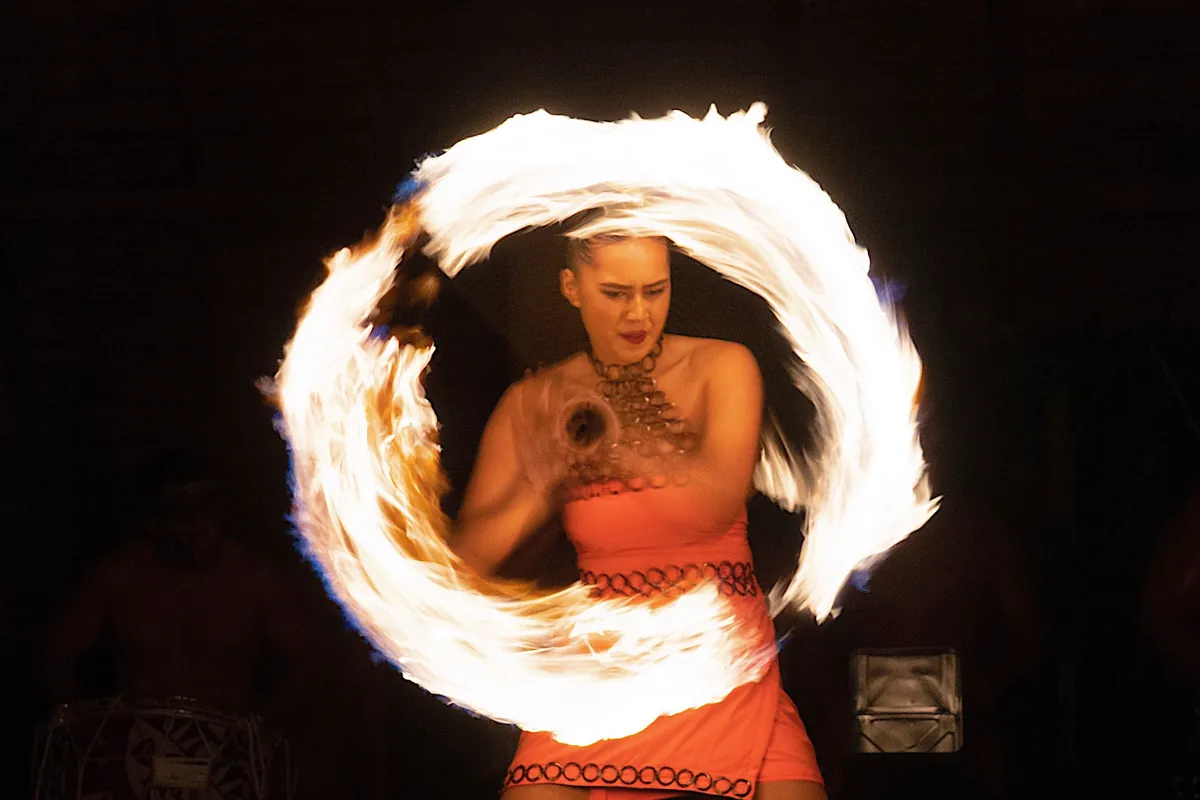
Before the fire there was the ailao. A Samoan warrior used it to show off his battle skill by spinning, tossing and catching a war club, sometimes dancing as he did so. Any club would serve. Colonial writers also saw women, often the daughters of high chiefs, perform the ailao while leading ceremonial processions. The most common clubs were carved heirlooms called anava, often cut with serrated edges and jagged teeth. During night dances, dancers often twirled and swung torches as well.
The nifoʻoti and the whalers
Whaling and trading ships from Europe and America brought new metal tools to Samoa, among them blubber knives with long handles and hooked cane knives. Their hook passed into the Samoan nifoʻoti, which carries the same hooked element whether carved from wood or forged from steel. The name is often translated as tooth of death, but Wikipedia's article explains that this reading does not fit Samoan grammar, and suggests the name more likely refers to a goat's curved horn or to the weapon's serrated cutting edge.
How the fire knife is made
The first fire knives were machetes with towels bound round each end and part of the blade left bare between them. Once the towels are alight, the dancer spins the knife and adds acrobatic moves while both ends burn. Over the years handles lengthened while blades shortened, and in commercial shows the sharpened blade has largely disappeared. Performers in American Samoa still use knives made from machetes, often dulled for younger dancers, while many luau shows elsewhere use poles wrapped in towels.
Across the Pacific
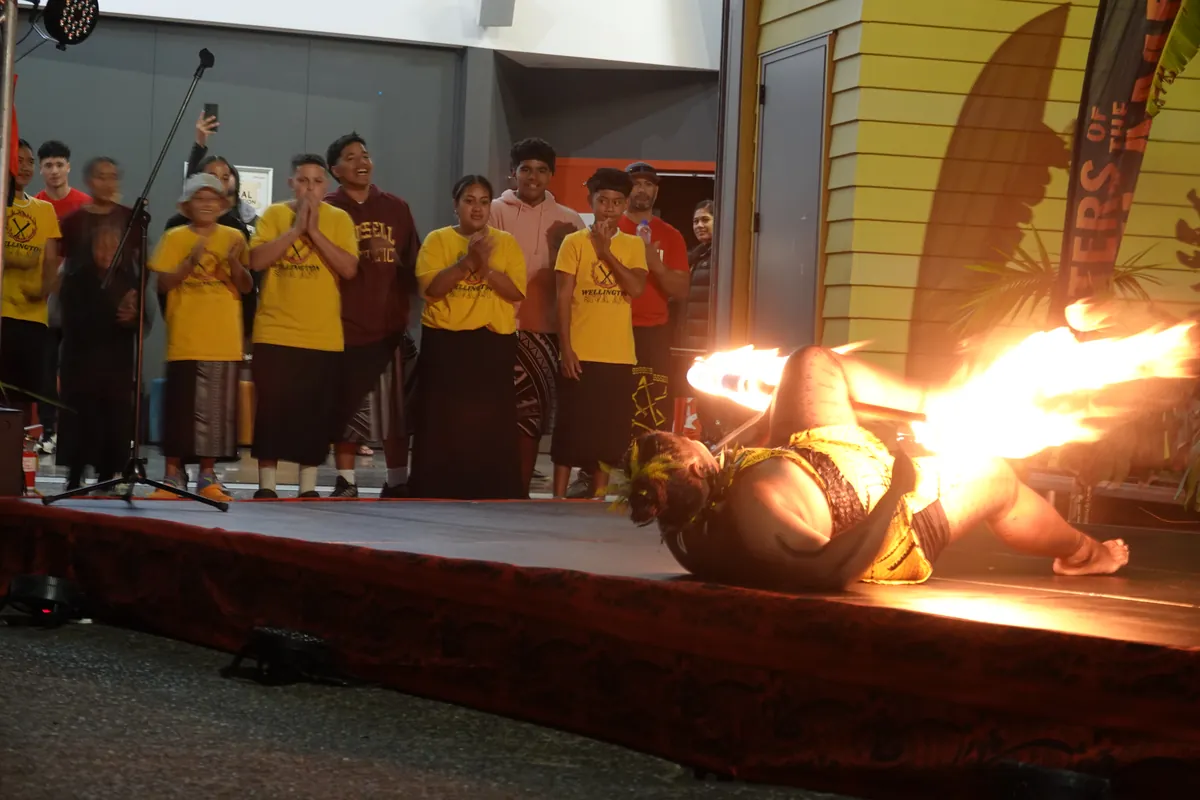
The siva afi has become a fixture of Polynesian luaus and shows. Dancers in Tahiti, Hawaiʻi, the Cook Islands, Fiji and Tonga have taken it into their own island shows, helped by close family ties with Samoa, so the fire knife now appears far beyond the islands where it began. In the mid twentieth century the old traditions were commercialised and westernised, and many moves seen in shows today are faster and flashier than the original warrior displays, performed at speed for audiences night after night.
The World Fireknife Championship
Competition has always been part of the fire knife. Today a World Fireknife Champion is crowned each year at a contest that began in 1992 and is always held in the third week of May. In 2007 the championships added a duet category and a women's category, and in 2010 the event grew to four nights. Champions have come from Samoa, Hawaiʻi, Tahiti, the Cook Islands and Florida, a sign of how far the art has travelled from its warrior roots.
Watching it at the luau
At the Myrtle Beach luau the fire knife is the closing act, so do not leave early. Watch for the throws, when the burning knife leaves the dancer's hands and spins in the air before the catch, and for the low moves close to the floor. Children are usually spellbound rather than scared, though the drums and flames are intense; a lap or a hand to hold helps the youngest. Phones come out at this point, so take your photos and then put the screen down to watch the rest.
Read next: Myrtle Beach luau: worth it?
Sources